
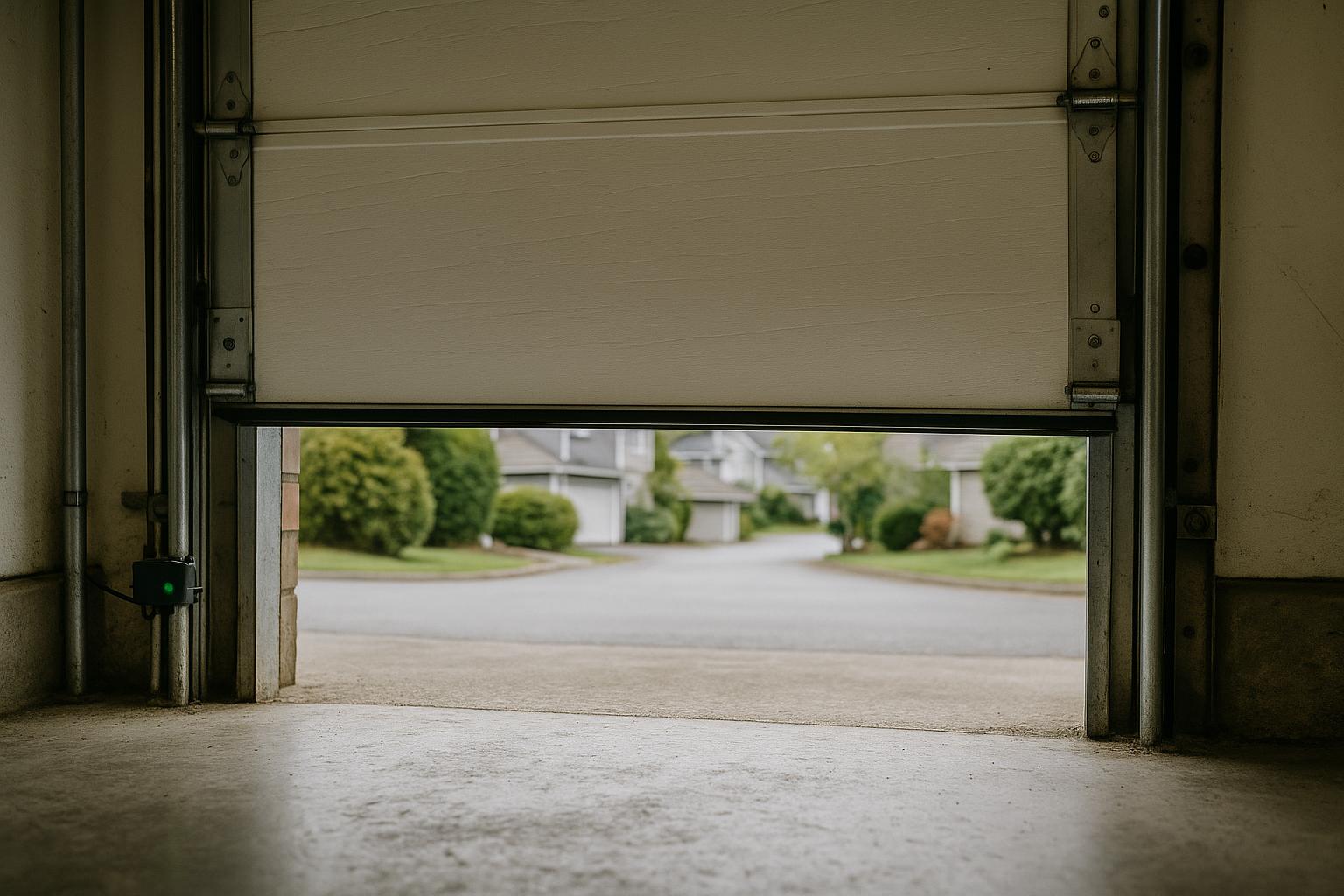
That Frustrating Moment When Your Garage Door Won't Stay Closed
You press the button on your remote, watch your garage door glide downward, and then — just inches from the floor — it stops and reverses back up. You try again. Same thing. Maybe it works on the third try, maybe it doesn't. Either way, you're standing in your Tumwater driveway wondering what just happened.
This is one of the most common garage door problems we get calls about, and the good news is that it's usually fixable without replacing the entire door or opener. The key is understanding why it's happening, because several different issues can cause the same frustrating symptom.
Understanding Your Garage Door's Safety System
Before we get into specific causes, it helps to know how your garage door opener decides when to reverse. Modern garage door openers have two main safety mechanisms:
- Photo-eye sensors: These are the small sensors mounted near the bottom of your garage door tracks on either side. They project an invisible beam across the opening. If something breaks that beam while the door is closing, the opener reverses the door to prevent crushing whatever is in the way.
- Auto-reverse force settings: Your opener also monitors how much resistance the door encounters while closing. If the door hits something — or if something is making it harder to close than expected — the opener reverses to prevent damage or injury.
Both of these systems are required by federal law on all garage door openers manufactured after 1993. They're essential safety features, especially if you have kids or pets. But when they malfunction or get out of adjustment, they can make your door reverse even when nothing is actually in the way.
Common Cause #1: Misaligned Photo-Eye Sensors
This is the number one reason garage doors reverse before closing, and it's often the easiest to fix. Your photo-eye sensors need to be precisely aligned with each other to maintain their invisible beam. Over time, they can get bumped by a bicycle, a trash can, a lawnmower, or even just vibrations from the door itself.
Here's how to check:
- Look at both sensors near the floor on either side of your garage door.
- Most sensors have a small LED light. Typically, one will glow green (the receiving sensor) and one will glow amber or orange (the sending sensor).
- If the green light is off or flickering, the sensors are misaligned.
- Gently adjust the sensor bracket until the green light glows steady.
Also check for dirt, cobwebs, or debris on the sensor lenses. Here in the Pacific Northwest, our damp climate means spider webs are a surprisingly common culprit. A quick wipe with a soft cloth can solve the problem instantly.
Common Cause #2: Force Settings Need Adjustment
Your garage door opener has adjustable settings that control how much force it uses to close the door. If the close-force setting is too low, the opener interprets normal friction as an obstruction and reverses.
This can happen after seasonal temperature changes — something we deal with regularly in Tumwater, where summer heat and winter cold cause metal tracks and springs to expand and contract. The door might close fine in July but start reversing in December when everything tightens up.
Most openers have small adjustment dials or screws on the back or side of the motor unit, usually labeled "force" or "close force." Turning the close-force dial slightly (usually a quarter turn at a time) can help. However, be cautious — setting the force too high defeats the safety purpose of this feature. If you're unsure, it's worth having a professional calibrate it properly.
Common Cause #3: Damaged or Worn Tracks
If your garage door tracks are bent, dented, or have accumulated debris, the door can bind or stick as it moves downward. When the opener senses that extra resistance, it reverses. Inspect your tracks visually for any obvious bends or obstructions. Even a small dent can cause problems at a specific point in the door's travel.
You can clean your tracks with a damp cloth to remove dirt and grime, but don't lubricate them — a common misconception. The rollers should be lubricated, but the tracks themselves should stay dry so the rollers can grip properly.
Common Cause #4: Worn or Broken Springs
Your garage door springs do the heavy lifting — literally. They counterbalance the weight of the door so your opener doesn't have to work as hard. When springs wear out or lose tension, the door becomes heavier for the opener to move. The opener may interpret this extra weight as an obstruction and reverse.
Signs that your springs may be the issue include:
- The door feels noticeably heavier when you lift it manually
- The door closes partway and then reverses
- You hear unusual creaking or popping sounds
- The door looks uneven or crooked when partially open
Important safety note: Garage door springs are under extreme tension and can cause serious injury if handled improperly. Spring replacement is one repair we always recommend leaving to a trained technician. Our team handles spring replacements throughout Tumwater, Olympia, Lacey, and surrounding areas, and we carry the most common spring sizes on our trucks so we can usually complete the repair in a single visit.
Common Cause #5: Travel Limits Are Off
Your opener has travel limit settings that tell it exactly how far the door should move in both the open and closed positions. If the close travel limit is set too short, the opener thinks the door has reached the floor before it actually has and may behave erratically. If it's set too far, the door pushes against the floor, the opener senses resistance, and it reverses.
Adjusting travel limits involves small dials on the opener unit, similar to the force adjustments. Small incremental changes are the way to go — over-adjusting can create new problems.
When to Call a Professional
Some of these fixes — cleaning sensors, wiping tracks, minor adjustments — are reasonable DIY tasks for a handy homeowner. But if you've tried the basics and your door is still reversing, or if you suspect spring or track damage, it's time to call in help.
Continuing to force a malfunctioning garage door to operate can turn a small problem into an expensive one. A binding door can burn out your opener motor. A weak spring can snap entirely. And a door that won't close reliably is a security risk for your home.
At Tumwater Garage Door, we diagnose the actual problem before recommending any repairs. We'll explain what's going on in plain language, give you an honest quote, and fix it right the first time. We serve homeowners throughout Tumwater, Olympia, Lacey, Yelm, Tenino, and Rainier — and we offer emergency service for situations that can't wait.
Don't Ignore a Reversing Garage Door
A garage door that won't close completely isn't just annoying — it leaves your home exposed to weather, pests, and potential intruders. Whether the fix is as simple as realigning a sensor or as involved as replacing worn springs, addressing the problem promptly saves you money and headaches down the road.
If your garage door has been giving you trouble, give us a call. We'll get it working the way it should.