
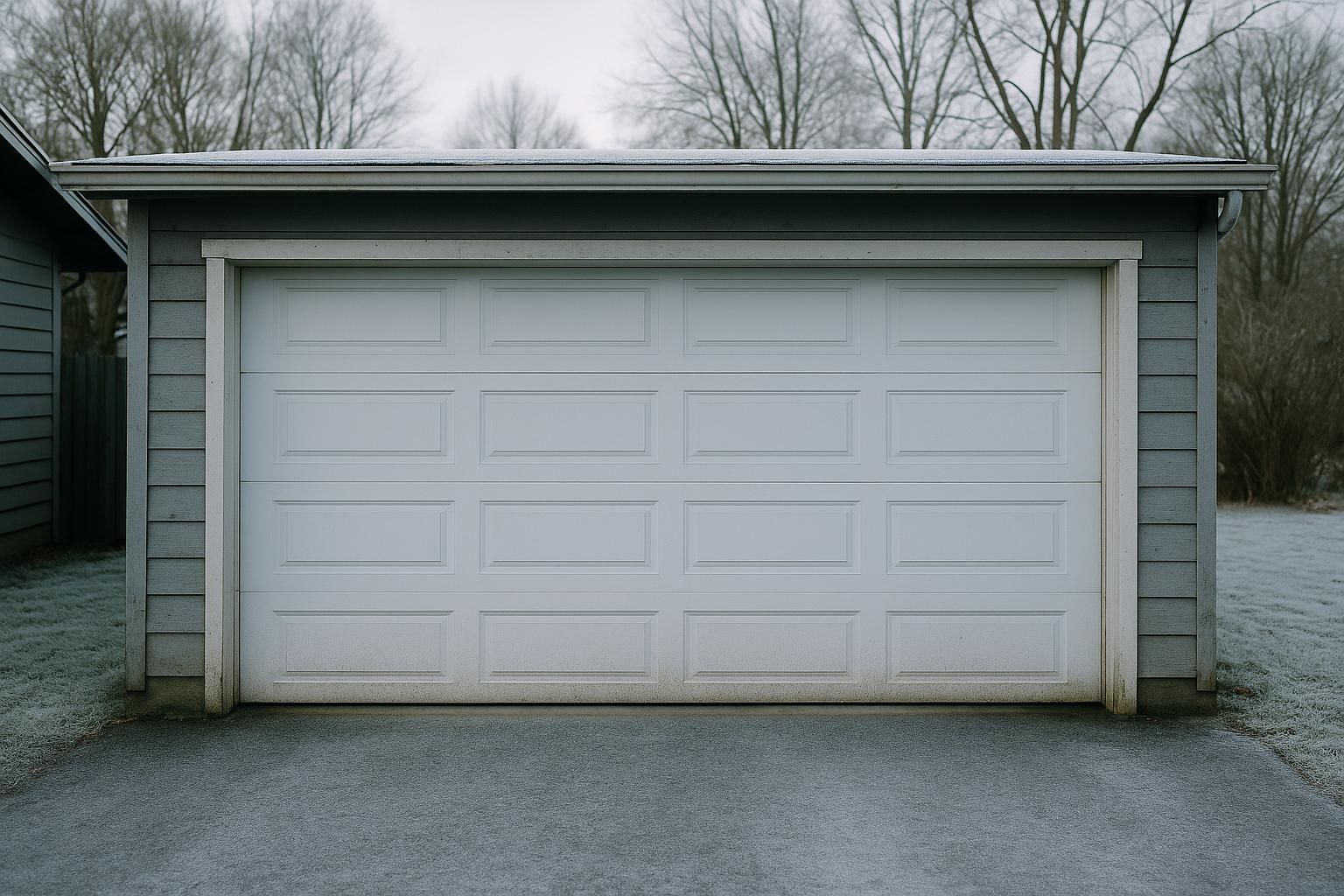
Winter Weather and Garage Door Problems Go Hand in Hand
If you've lived in Tumwater for even one winter, you know that cold, damp mornings are part of the deal. What you might not expect is how much that weather affects your garage door. You press the button, hear the motor strain, and the door barely budges — or doesn't move at all.
It's one of the most common calls we get between November and March. The good news is that most cold-weather garage door problems have straightforward causes and fixes. Let's walk through what's likely going on and what you can do about it.
Why Cold Weather Affects Your Garage Door
Your garage door is a mechanical system with metal parts, rubber seals, and lubricants that all respond to temperature changes. When the mercury drops, several things can happen at once:
- Metal contracts. Tracks, springs, and hinges are all metal. When they contract in the cold, tolerances tighten, and parts that normally move freely can start to bind.
- Lubricant thickens. The grease on your springs, rollers, and tracks can become stiff and sluggish in cold temperatures, creating more friction and resistance.
- Weatherstripping sticks. The rubber seal at the bottom of your door can freeze to the concrete floor, especially after rain or when moisture collects overnight.
- Your opener works harder. All of that added resistance means your garage door opener motor has to work significantly harder to lift the door, which can trigger safety features or cause the unit to stall out entirely.
The Frozen Seal Problem
This is the number one cold-weather garage door issue in the Pacific Northwest. It doesn't even have to be bitterly cold — just cold enough for moisture to freeze overnight. Water pools along the bottom seal, freezes, and essentially glues your door to the garage floor.
Here's what to do if this happens:
- Don't force it. If you keep pressing the opener button while the seal is frozen, you risk burning out the motor, stripping the gears, or tearing the weatherstripping right off the door.
- Break the seal gently. Use a flat shovel or a putty knife to carefully chip away the ice along the bottom edge of the door. Work from one side to the other.
- Apply warm water cautiously. Pouring a small amount of warm (not boiling) water along the seal can help melt the ice. Dry the area as best you can afterward so it doesn't refreeze.
- Try opening manually. Disengage the opener by pulling the emergency release cord, then lift the door by hand. Sometimes a gentle upward push is all it takes once the ice is loosened.
To prevent this from happening again, you can apply a thin layer of silicone-based lubricant or cooking spray along the bottom seal before cold nights. This creates a barrier that makes it much harder for ice to bond to the rubber.
Stiff Springs and Sluggish Rollers
Even if the seal isn't frozen, your door might feel heavy or move unevenly in cold weather. This usually comes down to lubrication. Standard grease gets thick and gummy when it's cold, and that added friction makes everything harder on your system.
The fix is simple: use a silicone-based or lithium-based garage door lubricant. These products are designed to perform in a wide range of temperatures. Spray a light coat on the springs, hinges, rollers, and tracks. Avoid using WD-40 as a long-term lubricant — it's a solvent, not a lubricant, and it can actually strip away the protective coating your parts need.
If your door still feels sluggish after lubrication, the springs themselves may be losing tension. Cold weather doesn't cause spring failure on its own, but it accelerates wear on springs that are already near the end of their lifespan. If your door feels noticeably heavier than it used to, it's worth having a technician check the spring balance.
Opener Strain and Safety Sensors
Modern garage door openers have built-in safety features that prevent the motor from overworking. If your door is harder to move due to cold weather, the opener may interpret that extra resistance as an obstruction and shut down.
You might notice the motor runs for a second or two and then stops, or the door lifts a few inches and drops back down. This doesn't necessarily mean your opener is broken — it means the system is protecting itself.
Start by addressing the friction issues described above. Lubricate the moving parts, check for ice along the bottom seal, and make sure nothing is physically blocking the tracks. If the problem persists, the opener's force settings may need adjustment. This is something we can handle quickly during a service call.
Also, check your safety sensors near the bottom of the door tracks. In Tumwater's wet winters, condensation can build up on the sensor lenses, causing misalignment or false readings. A quick wipe with a dry cloth often solves the issue.
When to Call a Professional
Most cold-weather garage door issues are minor and can be handled with basic maintenance. But there are situations where calling a professional is the right move:
- The door won't open at all even after you've cleared ice and lubricated the parts.
- You hear loud popping or snapping sounds when the door tries to move — this could indicate a broken spring or cable.
- The door opens unevenly, rising on one side faster than the other.
- Your opener is making grinding or buzzing noises but the door isn't moving.
- The door falls quickly when you try to close it, which is a serious safety concern.
These problems involve components under high tension or electrical systems that are best left to trained technicians. Attempting DIY repairs on springs or cables can result in serious injury.
Preparing Your Garage Door for Tumwater Winters
A little preparation in the fall can save you a lot of frustration on a cold morning. Here's a quick checklist:
- Lubricate all moving parts with a cold-weather-rated product.
- Inspect the bottom weatherstripping for cracks or gaps and replace it if needed.
- Test the door balance by lifting it manually to the halfway point — it should stay in place without drifting up or down.
- Clean the safety sensor lenses.
- Tighten any loose hardware on the tracks, brackets, and hinges.
- Schedule a professional maintenance visit to catch problems before they leave you stuck.
At Tumwater Garage Door, we help homeowners across Tumwater, Olympia, Lacey, and the surrounding area keep their garage doors running smoothly year-round. If your door is giving you trouble this winter — or you want to make sure it won't — give us a call. We'll show up on time, explain what's going on, and get it fixed right.