
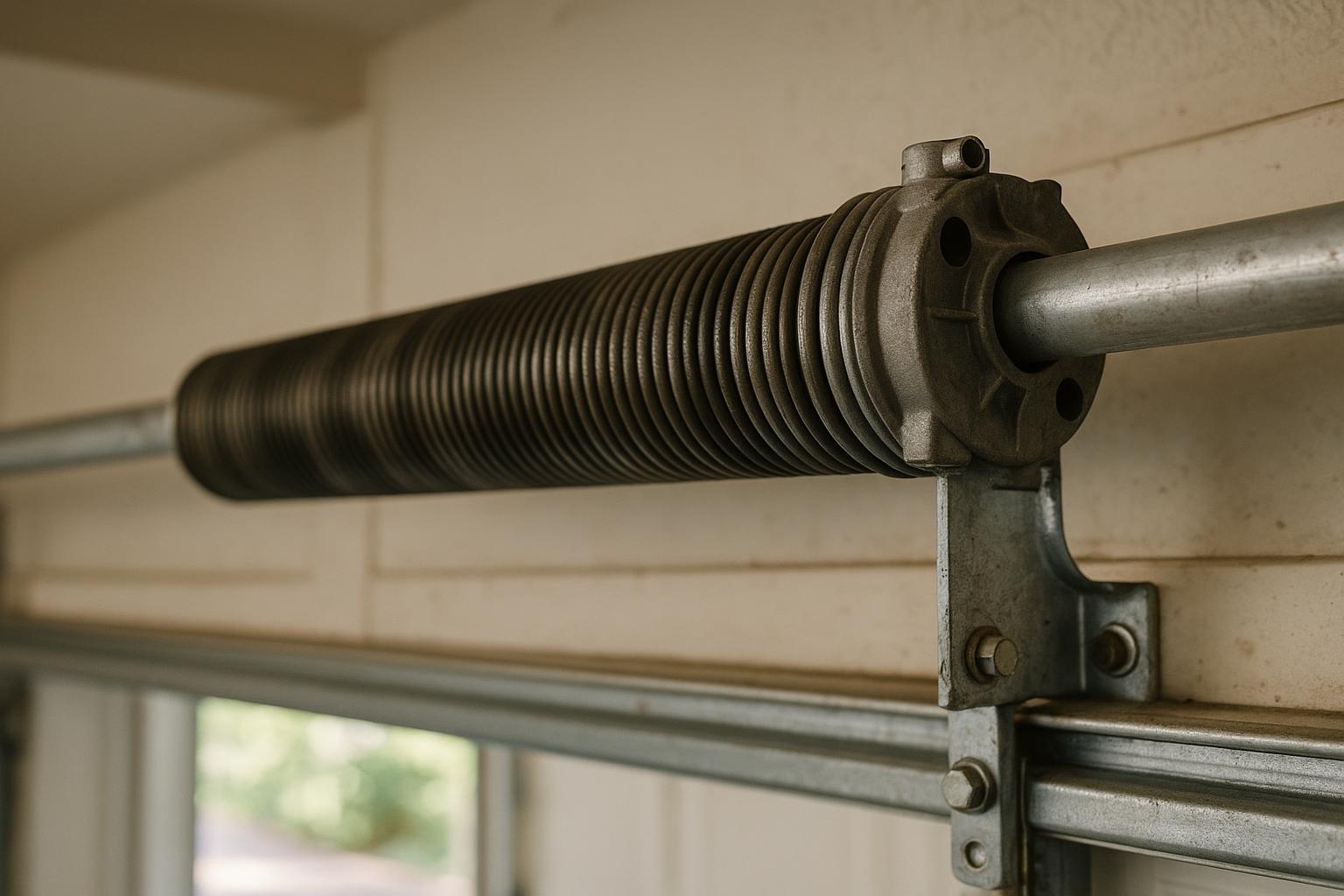
Your Garage Door Springs Are Trying to Tell You Something
If you're like most homeowners in Tumwater, you probably don't spend much time thinking about your garage door springs. They're tucked away above the door, doing their job quietly — until one morning you press the button and hear a loud bang that shakes the whole garage. A broken spring is one of the most common garage door emergencies we see, and it almost always comes with warning signs that are easy to miss if you don't know what to look for.
The good news is that catching a worn-out spring before it snaps can save you money, prevent damage to your door and opener, and keep your family safe. Here's what you need to watch for and when it's time to call a professional.
What Do Garage Door Springs Actually Do?
Your garage door is heavy — most residential doors weigh between 130 and 350 pounds depending on the material and size. The springs are what make it possible for your opener (or your arms) to lift that weight. They store mechanical energy when the door closes and release it when the door opens, essentially counterbalancing the weight of the door.
There are two main types of springs used in residential garage doors:
- Torsion springs — mounted on a metal shaft above the door opening. These are the most common type in modern garage doors and tend to last longer.
- Extension springs — mounted along the horizontal tracks on either side of the door. These are more common in older homes and lighter doors.
Both types are under extreme tension, which is why spring replacement is one of the most dangerous garage door repairs to attempt on your own.
7 Warning Signs Your Springs Are Wearing Out
1. Your Door Feels Heavier Than Usual
Try this simple test: disconnect your garage door opener by pulling the emergency release cord, then manually lift the door about halfway. A properly balanced door should stay in place on its own. If it feels unusually heavy or slides back down, your springs are losing tension and struggling to support the door's weight.
2. The Door Opens Unevenly or Crooked
If one side of your door rises faster than the other, it could mean one spring is weaker than its counterpart. This is especially common with extension spring systems where each side operates somewhat independently. An uneven door puts extra stress on the tracks, rollers, and opener, which can lead to bigger problems down the road.
3. You Hear Squeaking or Grinding Noises
While some noise is normal, new or worsening squeaking, popping, or grinding sounds when the door moves can indicate that the springs are corroding, losing lubrication, or developing stress fractures. Pay attention to any changes in how your door sounds — it's often the first clue something is off.
4. Visible Gaps in the Spring Coils
Take a look at your torsion spring above the door. A healthy spring has tightly wound coils with consistent spacing. If you notice gaps between the coils or sections where the spring looks stretched out, it's a sign the metal is fatiguing. This is often a late-stage warning that a break is imminent.
5. The Door Slams Shut Quickly
When springs lose their ability to control the door's weight, the door may close much faster than it should. This is a serious safety concern, especially in homes with children or pets. If your door drops quickly when closing — even with the opener engaged — don't ignore it.
6. Your Opener Is Straining
Your garage door opener is designed to guide the door, not lift all the weight by itself. If your springs are failing, the opener has to work much harder. You might notice the motor running louder, the door moving more slowly, or the opener stopping partway through the cycle. Continuing to use a strained opener can burn out the motor entirely.
7. The Springs Are More Than 7-10 Years Old
Most standard torsion springs are rated for about 10,000 cycles — one cycle being a full open and close. For the average Tumwater household that uses the garage door two to four times a day, that works out to roughly 7 to 10 years of use. If your springs are in that age range and you're noticing any of the signs above, replacement is likely overdue.
Can You Replace Garage Door Springs Yourself?
We strongly advise against it. Garage door springs are under an enormous amount of tension, and improper handling can cause serious injury or even death. Every year, DIY spring replacement attempts send thousands of people to the emergency room across the country. The tools required are specialized, and the process demands precise knowledge of spring sizing, winding counts, and safe tensioning procedures.
This is one repair where calling a professional isn't just the convenient choice — it's the safe one.
What to Expect During a Professional Spring Replacement
When you call Tumwater Garage Door for a spring replacement, here's what the process typically looks like:
- Inspection — We examine the springs, cables, drums, and overall door balance to assess the full picture.
- Spring sizing — We measure and match the correct spring size, wire gauge, and length for your specific door. Using the wrong spring leads to poor performance and premature failure.
- Replacement — We safely unwind the old springs, install the new ones, and wind them to the correct tension.
- Testing and adjustment — We test the door's balance, check the safety features, and make any necessary adjustments to ensure everything operates smoothly.
The whole process usually takes about an hour, and we always recommend replacing both springs at the same time — even if only one has broken. If one spring has reached the end of its lifespan, the other is almost certainly close behind.
Why Tumwater Homeowners Trust Us with Their Springs
We've been serving homeowners across Tumwater, Olympia, Lacey, and the surrounding communities for years, and spring replacement is one of the most common calls we get. We keep our trucks stocked with a wide range of spring sizes so we can handle most replacements in a single visit — no waiting days for parts to arrive.
We also believe in honest pricing. Before we start any work, we'll explain exactly what needs to be done and what it will cost. No surprises, no upselling parts you don't need.
Don't Wait for the Snap
A broken garage door spring is more than an inconvenience — it can leave your car trapped in the garage, damage your door panels, and create a genuine safety hazard. If you've noticed any of the warning signs in this article, the smartest move is to get ahead of the problem before it gets worse.
Whether you're in Tumwater, Yelm, Tenino, Rainier, or anywhere in the Olympia area, Tumwater Garage Door is here to help. Give us a call to schedule an inspection or spring replacement, and we'll make sure your door is safe, balanced, and working the way it should.