
Your Garage Door Shouldn't Sound Like That
You press the button, and instead of the smooth hum you're used to, your garage door lets out a grinding screech, a loud bang, or a rhythmic rattling that makes the neighbors look over. If your garage door has started making unusual noises, you're not alone — it's one of the most common complaints we hear from homeowners in Tumwater and the surrounding area.
The good news is that most garage door noises have identifiable causes, and many of them are fixable before they turn into expensive problems. The bad news is that ignoring those sounds almost always makes things worse. Let's break down the most common garage door noises, what's causing them, and what you should do about each one.
Grinding or Scraping Sounds
A grinding noise when your garage door opens or closes is one of the more alarming sounds you can hear. It usually points to one of a few issues:
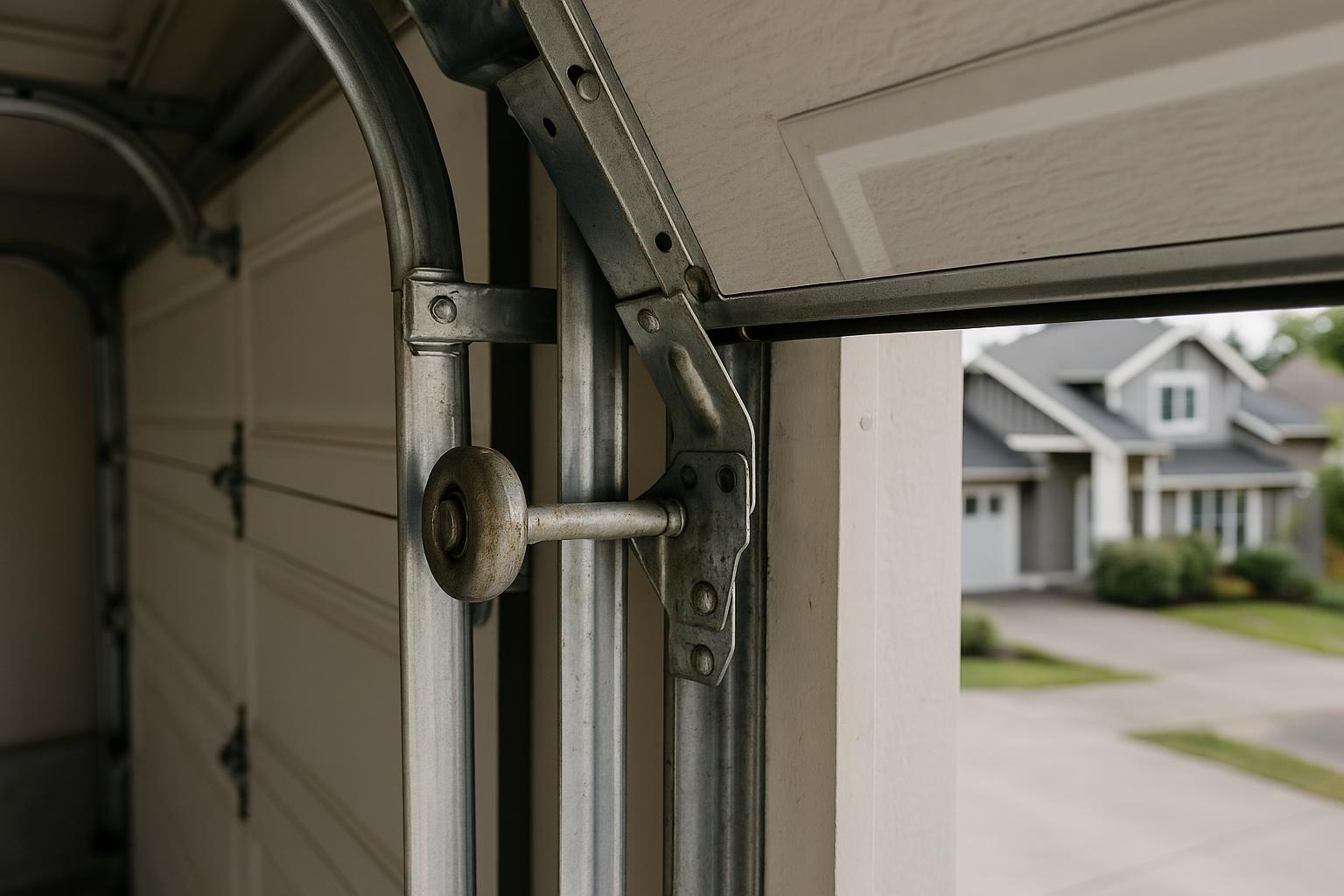
- Worn rollers: Metal rollers wear down over time, and when they do, they grind against the track instead of gliding smoothly. Nylon rollers are quieter and last longer, and upgrading to them is a relatively simple fix.
- Misaligned tracks: If the vertical or horizontal tracks have shifted even slightly, the door can scrape against them as it moves. This creates a harsh metal-on-metal grinding sound and can cause further damage to both the tracks and the door panels if left unchecked.
- Dry or damaged hinges: Hinges connect your door panels and allow them to flex as the door curves along the track. When hinges wear out or lose lubrication, they can produce a grinding or binding noise.
If you're hearing grinding, stop using the door and inspect the rollers and tracks visually. Look for metal shavings, visible wear on the rollers, or gaps between the rollers and the track. These are signs you need professional attention before the problem escalates.
Squealing or Squeaking
A high-pitched squeal or persistent squeak is usually a lubrication problem. Your garage door system has dozens of moving metal parts — rollers, hinges, springs, bearings, and the opener chain or screw drive — and all of them need periodic lubrication to function quietly.
Here in Tumwater, our damp Pacific Northwest climate can actually accelerate rust and corrosion on garage door hardware, which makes regular lubrication even more important. A quality silicone-based or lithium garage door lubricant applied to the rollers, hinges, springs, and tracks can often eliminate squeaking immediately.
A word of caution: Don't use WD-40 as a long-term lubricant. It works as a solvent and can actually strip away the grease your components need. Use a product specifically designed for garage door systems.
If lubrication doesn't solve the squeal, the issue may be worn bearings in the rollers or torsion spring system, which should be inspected and replaced by a trained technician.
Loud Banging or Popping
A sudden bang or pop when your garage door operates is hard to ignore — and you shouldn't ignore it. Common causes include:
- Torsion spring issues: As torsion springs age, they can shift on the shaft or develop weak spots that cause them to jerk rather than unwind smoothly. A loud pop during operation can mean a spring is close to failure. Spring replacement is dangerous and should always be handled by a professional.
- Loose hardware: Over time, the vibration of daily use loosens nuts, bolts, and brackets throughout the door system. A loose support bracket or track mount can produce a banging sound as the door moves through that section.
- Opener issues: If you have a chain-drive opener, a loose or worn chain can slap against the rail, creating a banging noise. Adjusting the chain tension usually resolves this.
If you hear a single, very loud bang while the door isn't in use, a spring may have already broken. Do not attempt to operate the door — call for repair immediately.
Rattling or Vibrating
Rattling is one of the most common garage door noises and is often the easiest to fix. It typically means something is loose. Check the following:
- Nuts and bolts: Grab a socket wrench and tighten all the bolts on the tracks, hinges, and brackets. Don't overtighten — just snug them up.
- Chain tension: A chain-drive opener with too much slack will rattle during operation. Consult your opener's manual for proper tension adjustment.
- Loose panels or weatherstripping: Damaged or loose panels and worn weatherstripping can vibrate and rattle as the door moves.
If tightening everything doesn't stop the rattle, the issue may be internal to the opener unit itself — worn gears, a failing motor, or loose internal components. At that point, it's worth having a technician take a look before the opener fails completely.
Rhythmic Ticking or Clicking
A repetitive ticking or clicking sound that follows the rhythm of the door's movement often points to something caught in the track, a damaged roller, or a bent piece of track that the rollers are bumping over each cycle. Inspect the tracks for debris, dents, or obstructions. Even a small pebble or piece of hardened dirt can cause a clicking noise every time a roller passes over it.
When to DIY and When to Call a Pro
Some garage door noise issues are safe for homeowners to address on their own:
- Applying lubricant to rollers, hinges, and springs
- Tightening loose bolts and brackets
- Clearing debris from the tracks
- Adjusting chain tension on the opener (with your manual handy)
However, certain repairs should always be left to a qualified technician:
- Anything involving torsion or extension springs
- Realigning or replacing tracks
- Replacing rollers on high-tension doors
- Opener motor or gear replacement
- Cable repair or replacement
Garage door springs and cables are under extreme tension and can cause serious injury if handled incorrectly. It's never worth the risk of a DIY attempt on these components.
Don't Wait Until the Noise Becomes a Breakdown
Strange noises are your garage door's way of asking for help. Addressing them early almost always costs less than waiting for a full breakdown. A noise that starts as a minor annoyance on Monday can become a door that won't open by Friday — and that usually means a more involved and costly repair.
At Tumwater Garage Door, we help homeowners throughout Tumwater, Olympia, Lacey, Yelm, Tenino, and Rainier diagnose and fix noisy garage doors every week. We'll tell you exactly what's causing the sound, explain your options, and fix it right the first time. If your garage door has started making a noise that doesn't sound right, give us a call — we'd rather catch the problem early than see it turn into an emergency.